
You know that moment when you’re spiraling?
Not the artsy, incense-burning, soul-awakening kind.
We mean the real deal: when one moment you’re annoyed you spilled your coffee, and the next you’re Googling
“Can a person disappear into the forest and start over?”
We’ve all been there. (Some of us have Pinterest boards titled Cabin Vibes.)
The problem isn’t the spiral.
The problem is when we don’t know we’re in it, or how to step out of it gently.
That’s where this deceptively simple worksheet comes in.
And no, it’s not about “good vibes only.” It’s about honest vibes, processed healthily.
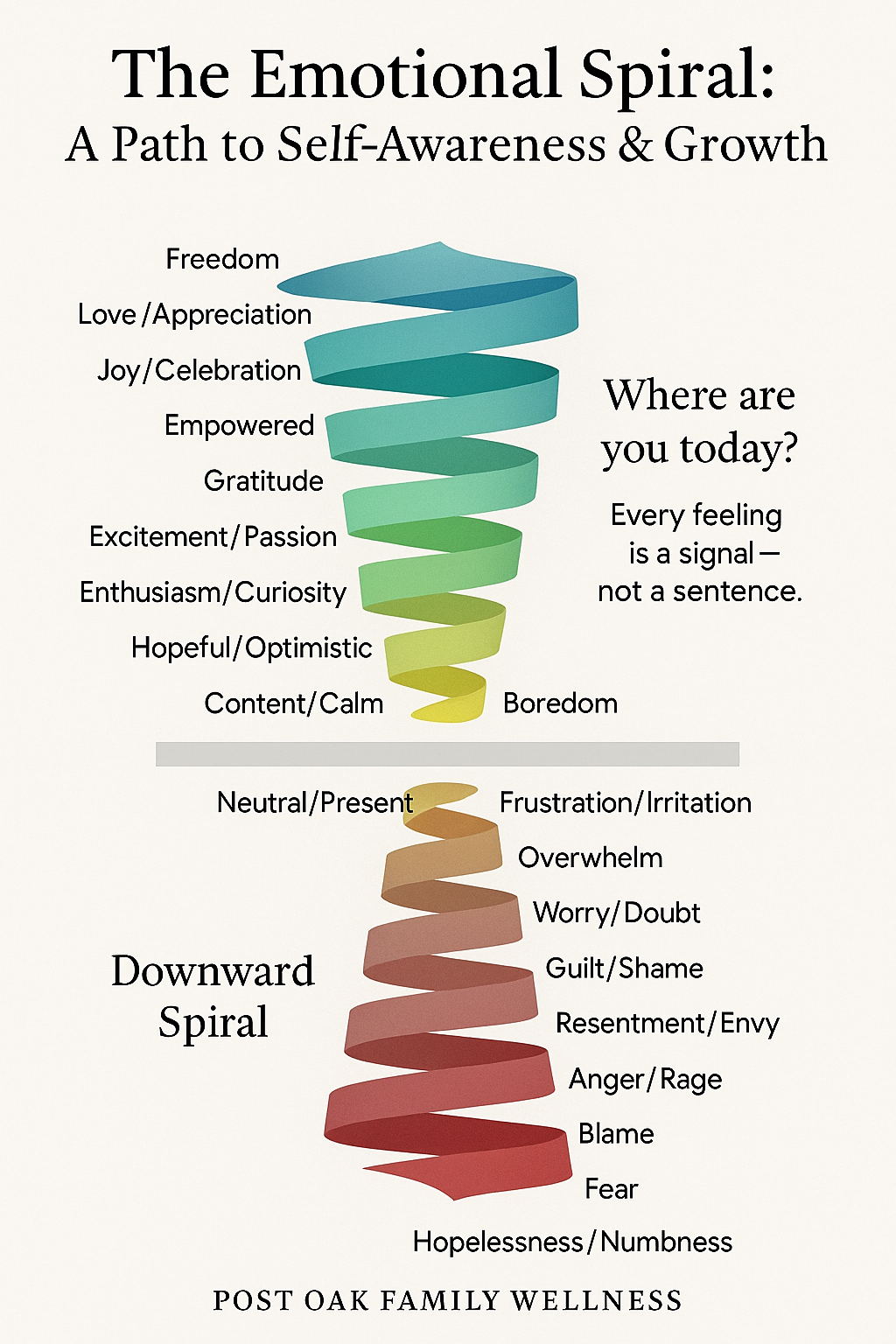
🌀 What Is the Emotional Spiral Reflection Worksheet?
It’s a one-page prompt to help you:
Identify where you are emotionally (without judgment)
Understand what got you there (without spiraling further)
Gently experiment with shifting (instead of suppressing)
Ask for support (without having to be a crisis)
Designed for use in therapy, coaching, parenting, or your own mental wellness practice, this worksheet is based on real emotional regulation tools used by therapists and coaches worldwide — especially those working with trauma, anxiety, and behavior cycles.
—
🧠 Why It Works (The Science Part)
When you name an emotion, you tame it.
Literally. It’s called affect labeling — and research from UCLA’s Matthew Lieberman shows that when people put feelings into words, the amygdala (your brain’s fear center) calms down, and the prefrontal cortex (your logical reasoning) comes back online.
“Naming an emotion seems to disrupt its intensity.”
— Lieberman et al., UCLA Social Cognitive Neuroscience Lab
So while it may feel like journaling is just scribbles and sighs, your brain is actually rewiring how it relates to stress.
✍️ How to Use the Worksheet (Without Making It a Chore)
1. Start Where You Are
Not where you wish you were.
Answer: “What emotion best describes how I feel right now?”
(No wrong answers. “Blah” is valid. So is “mildly doom-tinged coffee fatigue.”)
2. Name the Roots
Ask: “What may have contributed to this feeling?”
Sometimes it’s deep. Sometimes it’s “I skipped lunch and I’ve been talking to a 3-year-old all day.” (Both count.)
3. Experiment with the Shift
The question: “What is one small shift I can try?”
Not “Fix everything now.” Just… what’s one notch up on the spiral?
Ex: Movement, music, water, safe conversation, flipping your socks inside out for no reason. (It’s a thing. Try it.)
4. Ask for Support
Even if it’s just texting a friend: “Hey, today’s kinda crunchy. Can I vent for 3 minutes max?”
Small moments of connection are giant lifelines.
👩⚕️ In Practice: Who This Helps
This worksheet is used by:
Therapists to help clients build emotional language and safety.
Parents to model self-regulation and coach kids through big feelings.
Coaches and educators to help people navigate mindset dips and emotional overwhelm.
Human beings (hi, you) just trying to stay afloat in a wildly overstimulated world.
—
🚀 The Bigger Goal: Self-Compassion, Not Perfection
If you’re using this worksheet to become the “best version” of yourself — pause. That version isn’t some perfect, always-happy robot.
It’s the you who knows where you are emotionally.
Who can name it, ride the spiral, and still choose gentleness.
🌟 Final Thought: Feelings Aren’t Failures
“Your emotions are not permanent. They are signals — and they shift.”
So go ahead. Print the worksheet. Tape it on the fridge. Scribble in the margins.
Cry a little. Laugh a little. Shift a little.
And next time you’re spiraling… spiral mindfully.
— Wellness, Wealth & Beauty™
🌿 Enjoyed this post?
Let’s keep the conversation going.
Join our newsletter for gentle reminders, wellness tools, parenting tips, and soulful reflections—delivered with care, not clutter. 💌
✨ You’ll also get early access to guides, seasonal self-care ideas, and special updates from Samantha, LPC-Associate & founder of Post Oak Family Wellness.
Sign up here and stay connected.