
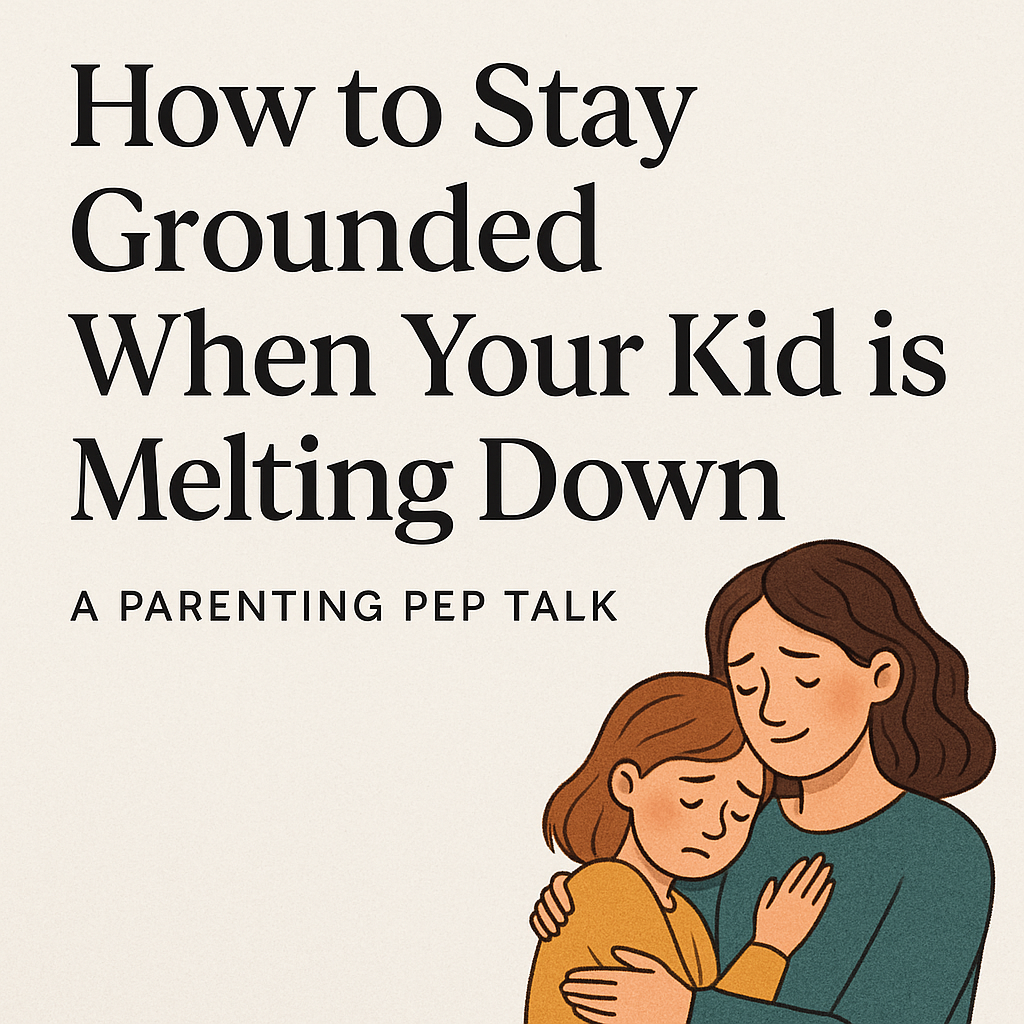
Let’s be honest.
If you’ve ever stood in your kitchen while your child was in full-blown meltdown mode, screaming, crying, throwing themselves on the floor, and thought:
“I might melt down too,”
you’re not broken. You’re just human.
And you’re not alone.

Parenting is emotional labor. And no one handed us a manual titled “What to Do When Your Kid is Losing It in Aisle 7 of Target.”
The truth is: meltdowns aren’t about bad kids or bad parenting. They’re about overwhelmed little nervous systems trying to make sense of big feelings—and overwhelmed adults trying to stay afloat through it all.
Let’s talk about how you can stay grounded, even when everything around you feels like it’s unraveling.
Meltdowns Are Not Misbehavior
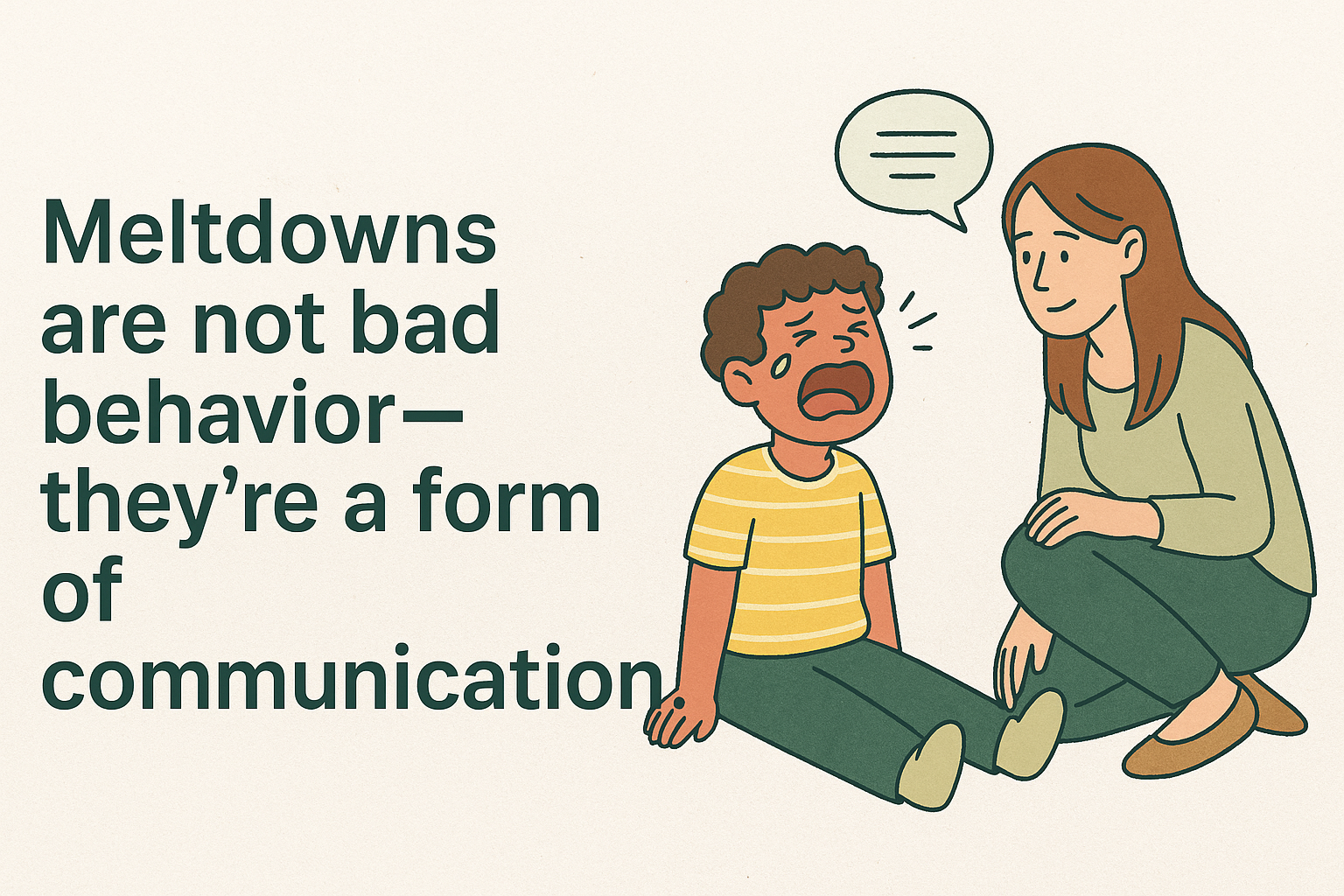
Here’s the twist nobody told you:
Meltdowns aren’t “bad behavior.” They’re communication.
Kids don’t always have the language to say,
“I’m tired.”
“I’m overstimulated.”
“I’m feeling disconnected.”
So instead, it shows up as a scream. A stomp. A sob.
When we shift from “How do I stop this?” to “What is this trying to tell me?”
—we unlock something powerful: empathy.
The First Step Is Yours: Regulate Before You React
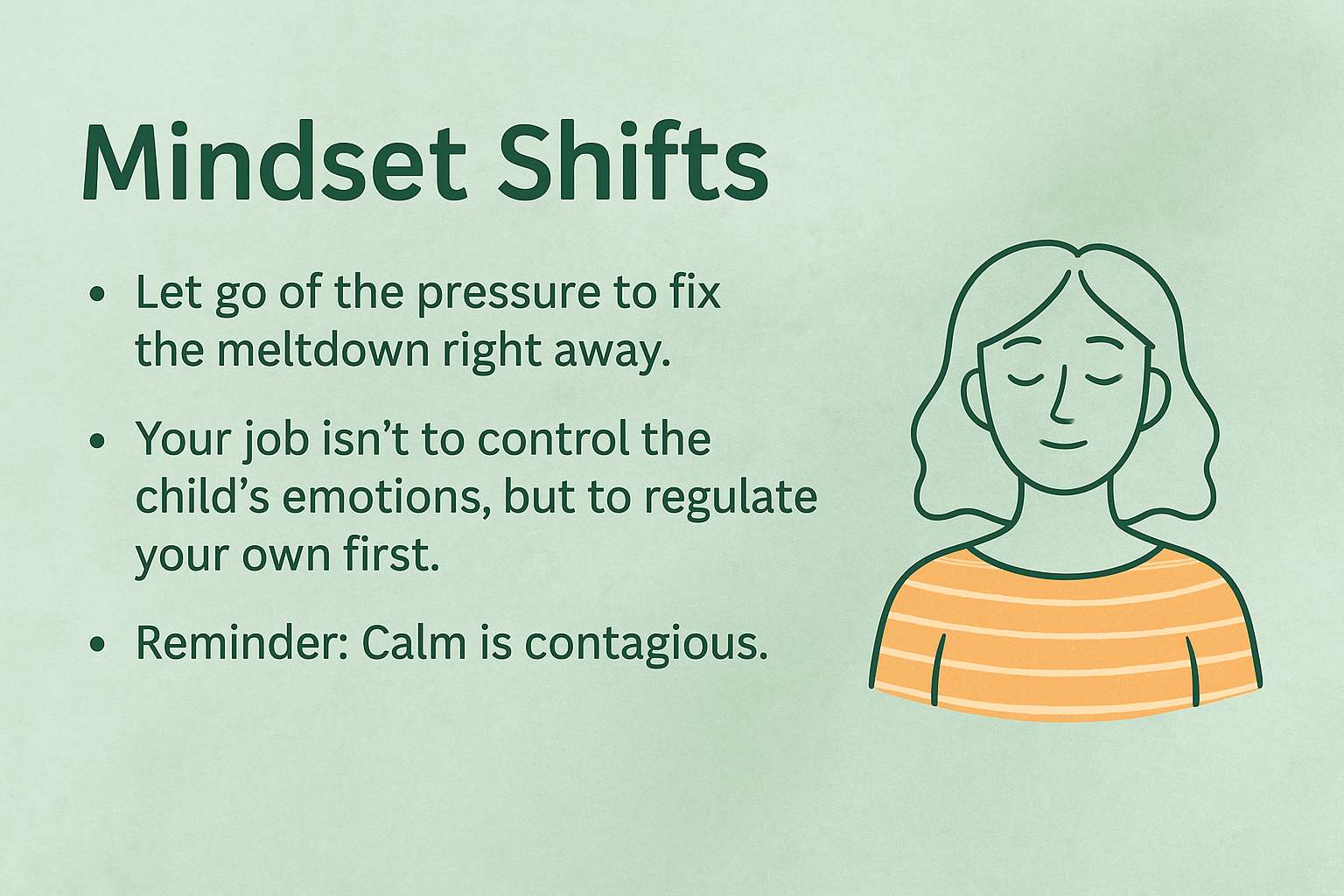
You can’t out-calm chaos with chaos.
And you can’t coach a meltdown if you’re having one too.
So before anything else:
Take 3 slow breaths.
Feel your feet against the floor.
Put one hand on your heart.
And remind yourself:
> “I don’t have to fix this right now. I just need to stay present.”
Your child’s nervous system is looking for an anchor.
You are the anchor. (Even if you don’t feel like one.)
Say This, Not That
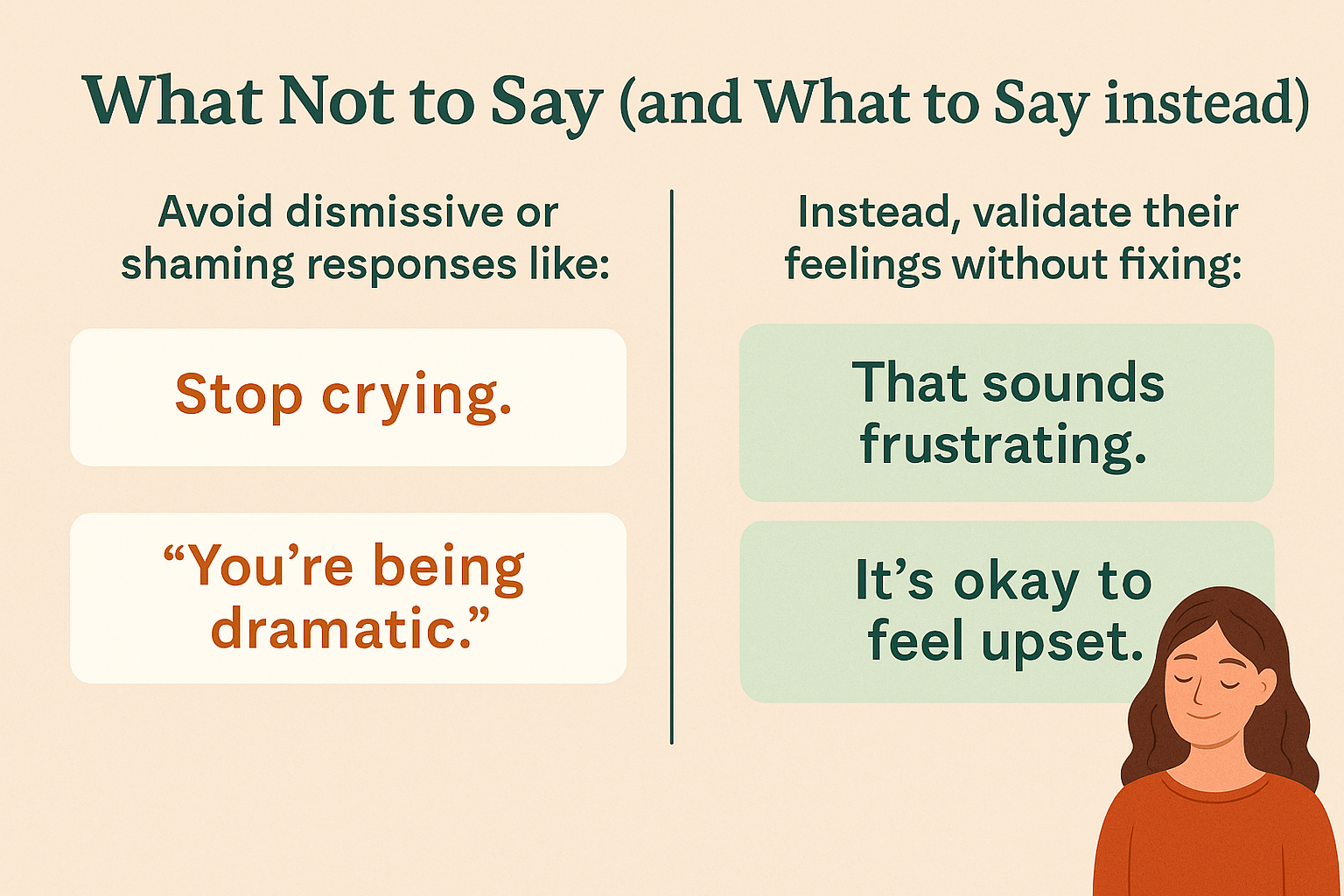
Avoid these knee-jerk phrases (no shame if you’ve said them—we’ve all been there):
❌ “Stop crying.”
❌ “You’re fine.”
❌ “You’re being dramatic.”
Instead, try:
✅ “You’re having a hard time. I’m here.”
✅ “It’s okay to feel upset.”
✅ “That sounds really frustrating.”
Validation doesn’t mean you’re agreeing. It means you’re connecting.
Real Strategies for Real Moments
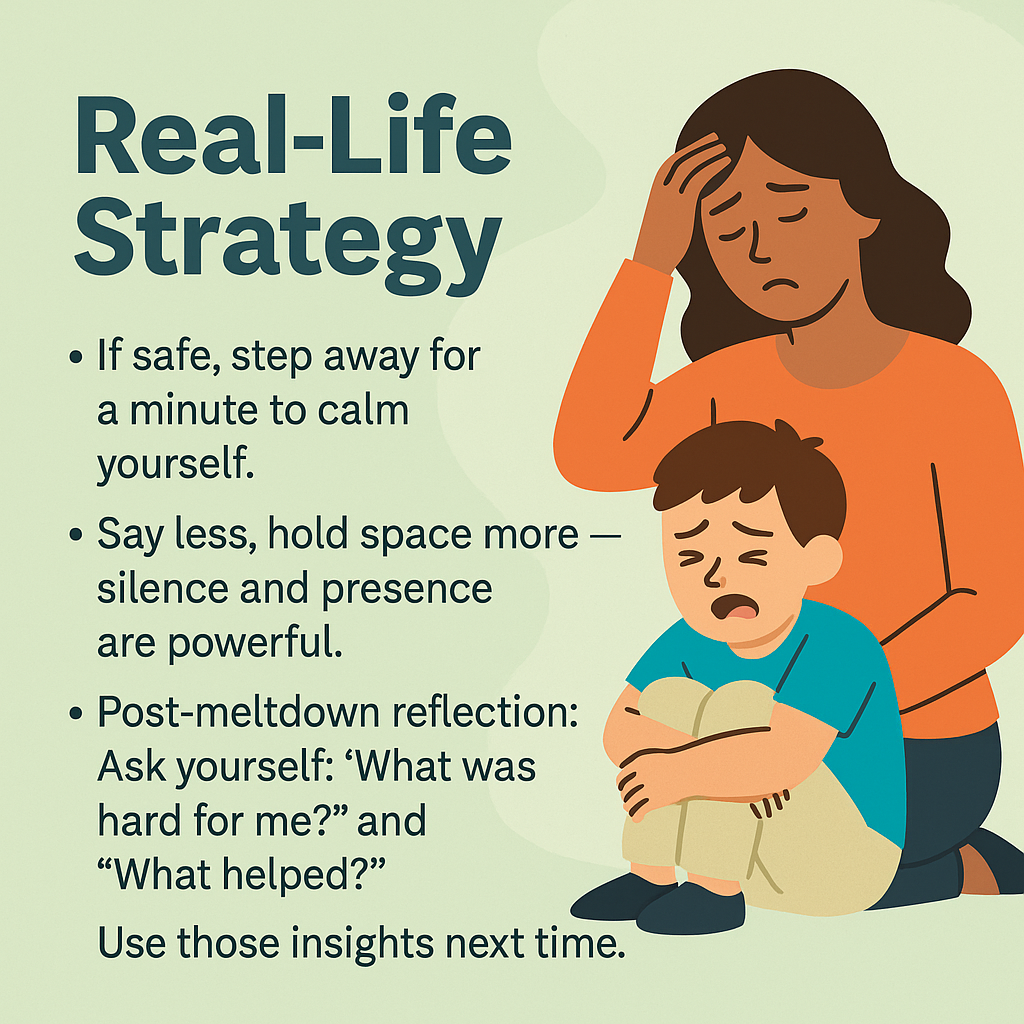
When the room is loud and your brain is fried, try this:
1. If it’s safe, step into another room and reset your own nervous system first.
2. Don’t rush to lecture. Hold space.
3. After the storm, ask yourself:
“What made that moment hard for me?”
“What helped?”
These answers become tools for next time.
Let Go of the Perfect Parent Illusion
Newsflash: calm doesn’t mean quiet.
It means centered. Intentional.
You don’t need to say the perfect thing.
You don’t need to fix the problem in 30 seconds.
You just need to show up.
Messy. Imperfect. Human.
And that’s enough.
Gentle Reminder:
Your job isn’t to control your child’s feelings.
Your job is to guide them through it without getting lost yourself.
Breathe.
You’ve got this.
And if you need support—we’re here.
—
👇 Want to Go Deeper?
You’re not in this alone.
Visit the bottom of this page to see what else is available to support you:
Parenting isn’t about being unshakable.
It’s about learning how to return to calm—and bring your child with you.
And that? That’s something to be proud of.
🌿 Enjoyed this post?
Let’s keep the conversation going.
Join our newsletter for gentle reminders, wellness tools, parenting tips, and soulful reflections—delivered with care, not clutter. 💌
✨ You’ll also get early access to guides, seasonal self-care ideas, and special updates from Samantha, LPC-Associate & founder of Post Oak Family Wellness.
Sign up here and stay connected.