
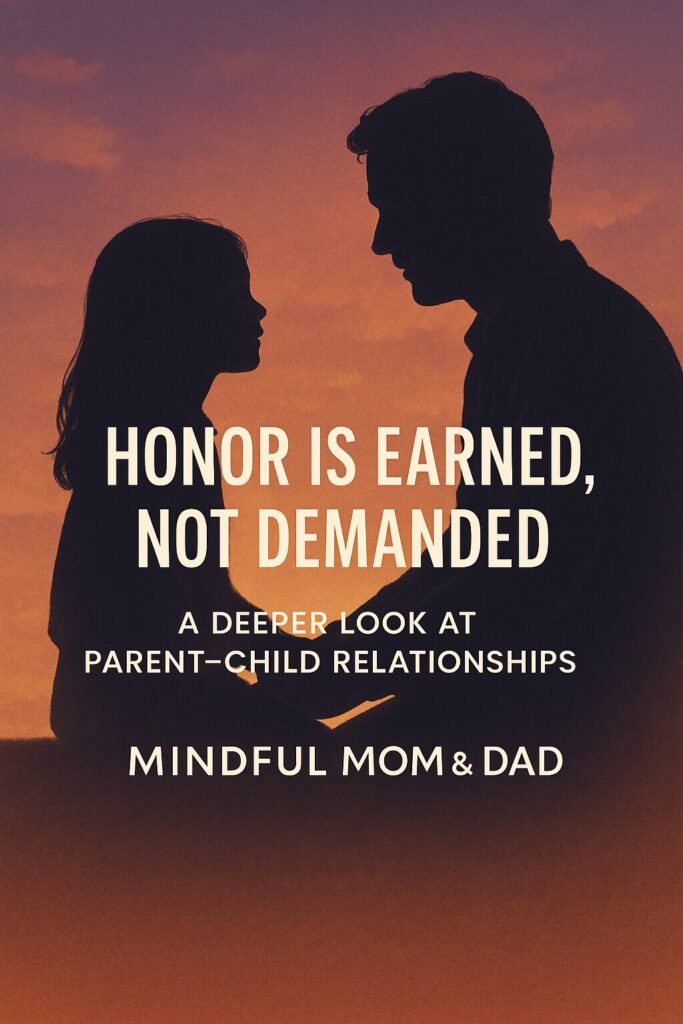
“Honor your father and mother”
We grew up hearing it, but what does that really mean?
Many of us have heard this phrase from Ephesians 6:2-3. It’s the first commandment with a promise:
“so that it may go well with you and that you may enjoy long life on the earth.”
On the surface, this verse seems to place a one-sided obligation on children: to show respect, gratitude, and deference to their parents, no matter what. But does honor work that way? Or is it part of a deeper, more reciprocal relationship?
In this post, we’ll explore the concept of honor as a two-way street—one that involves responsibility, respect, and, ultimately, a relationship that fosters growth and mutual care.
Honor Is Rooted in Responsibility
At its core, honor is not about blind obedience. It’s about recognizing and respecting someone’s role in your life. But respect is most meaningful when it is earned through loving actions rather than demanded.
When parents provide guidance, emotional support, and love, children naturally develop a deep sense of respect and gratitude. But what happens when that foundation is missing?
If a parent is neglectful, abusive, or emotionally unavailable, does honor still apply? While the answer may be complex, one thing is clear: honor does not mean tolerating harm.
Colossians 3:21 offers an important balance to the commandment of honor:
“Fathers, do not embitter your children, or they will become discouraged.”
Parents have a responsibility not to misuse their authority, because discouragement and resentment are natural consequences of an imbalanced relationship.
Authority Without Accountability Breeds Resentment
Authority and responsibility go hand in hand. A good leader earns the respect of their team not by demanding it, but by showing wisdom, kindness, and fairness. The same principle applies to parenting.
If children are expected to honor their parents, parents should honor their children by treating them with dignity, listening to their needs, and leading with love.
Many struggles in parent-child relationships stem from one-sided expectations—where parents demand respect without self-reflection. However, true respect is not forced—it is cultivated through emotional connection, consistency, and care.
A parent’s role is not simply to enforce rules but to create a safe space for their child to grow, develop independence, and learn emotional intelligence.
Healthy Relationships Require Mutual Respect
A parent-child relationship is not just about discipline but also connection. Parents who value their child’s feelings, thoughts, and autonomy lay the foundation for a relationship built on trust rather than fear.
So what does this look like in practice?
Listen before reacting. Children, like all people, want to be heard and understood.
Model the respect you wish to receive. If you want your child to speak kindly and respectfully, demonstrate the same.
Acknowledge your own mistakes. Parents are human, too. Admitting when you’re wrong teaches your child that accountability is a strength, not a weakness.
Parents who respect their children’s individuality, emotions, and boundaries create an environment where honor flows naturally—not from obligation, but from genuine love and appreciation.
Honor Is a Relationship, Not a Rule
The commandment to “honor your father and mother” is not about obedience at all costs. Instead, it’s about fostering a relationship where honor is a natural outcome of love, care, and mutual respect.
True honor is not something that can be demanded—it is cultivated through consistent love, guidance, and respect. Parents who seek to be honored should first ask:
“Am I leading in a way that invites honor?”
When honor is approached as a relationship rather than a rule, it becomes a source of strength, growth, and connection for both parents and children.
—
What’s Your Take?
How do you view the balance between honoring parents and parental responsibility? Have you experienced a relationship where honor felt earned rather than expected? Let’s discuss in the comments below!
🌿 Enjoyed this post?
Let’s keep the conversation going.
Join our newsletter for gentle reminders, wellness tools, parenting tips, and soulful reflections—delivered with care, not clutter. 💌
✨ You’ll also get early access to guides, seasonal self-care ideas, and special updates from Samantha, LPC-Associate & founder of Post Oak Family Wellness.
Sign up here and stay connected.