
When “Just One More Thing” Becomes the Norm

Have you ever caught yourself snapping at your child over something tiny, like spilled juice or a sock on the floor and immediately felt the heavy wave of guilt roll in? (Yep, the one-two punch: snap → guilt → overthinking → resentment.)
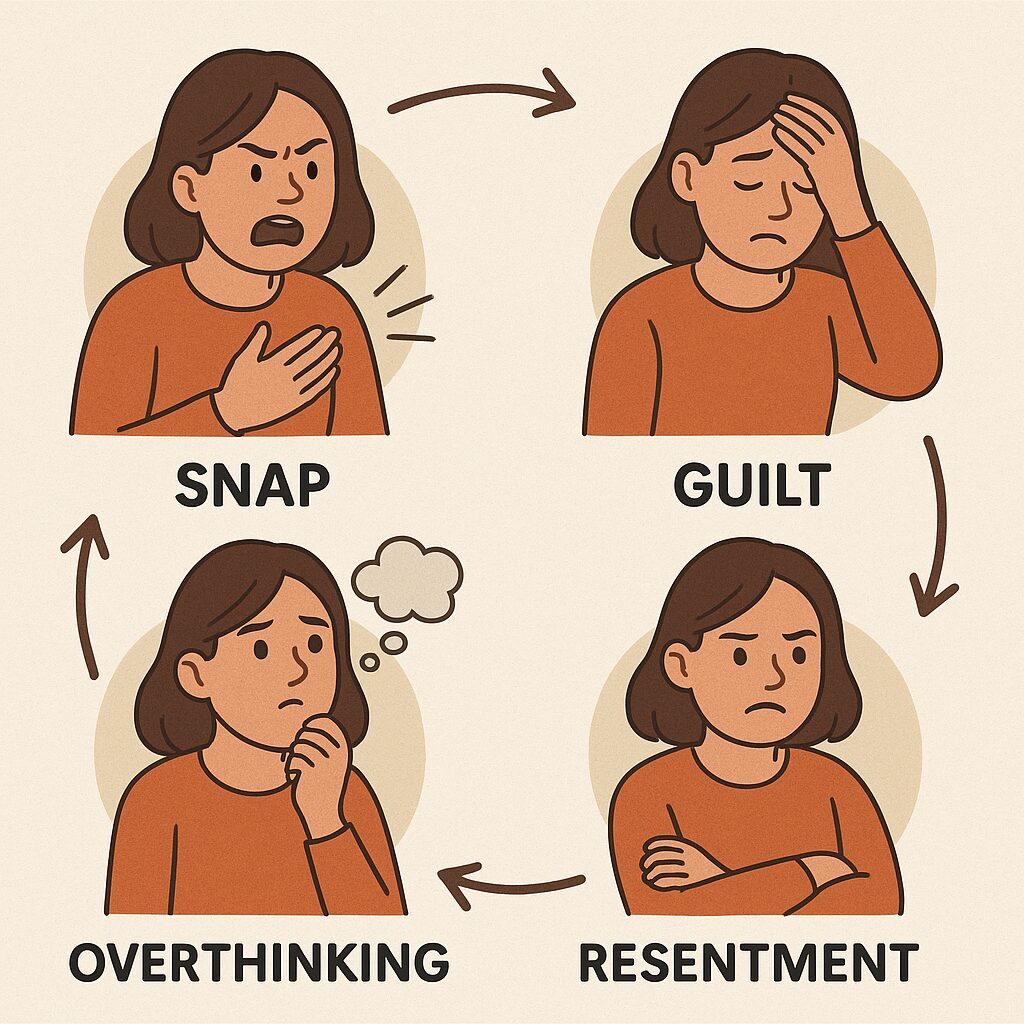
These aren’t signs you’re a bad parent. They’re signs you’re overloaded.
Neuroscience has a word for it: cognitive overload. When our brains are juggling too much, they default to shortcuts, automatic behaviors we picked up years ago, often without even realizing it. Sometimes those shortcuts work. But in parenting? They can leave us feeling stuck in reactive mode instead of intentional mode.
Research from the American Psychological Association shows that parents who practice small, mindful shifts report less stress, improved relationships, and even better child outcomes (APA, 2022). That’s not perfection, it’s parental presence.
So, how do you shift out of auto-pilot without needing a 10-day meditation retreat or a total personality makeover? Let’s break it down.
🚩The Red Flags: Signs You’re Running on Auto-Pilot 🚩
Snapping often: Your fuse is shorter than a TikTok attention span.
Guilt: Every bedtime turns into a rerun of “What I Should Have Said.”
Constant overthinking: Even small decisions (screen time? snacks?) feel like Olympic-level strategy.
Resentment: You love your kids deeply… but you’re also simmering under the surface.
Sound familiar? (If you said no, chances are you’re too tired to admit it.)
The Small Shifts That Change Everything
1. Take a Mindful Pause
One breath. One beat. That’s all it takes.
Before reacting, inhale slowly through your nose, exhale fully through your mouth. It interrupts the stress-response loop and gives your prefrontal cortex—your thinking brain—a fighting chance to weigh in.
Clinical psychologist Dr. Christopher Willard calls this “micro-mindfulness.” He puts it this way: “You don’t have to change everything. You just have to find one breath of awareness, and that can change everything else.” (Willard, Child’s Mind, 2010).
2. Use Grounding Tools
Feeling your chest tighten? Try this: place your hand over your heart for 30 seconds. Studies show physical touch, even self-touch, signals safety to your nervous system and reduces cortisol.
Scientific studies show that self‑soothing touch, like a hand over the heart, can reduce stress hormone (cortisol) levels and help your body feel safer and more grounded PMCPsyPost – Psychology NewsSelf-Compassion. And researchers like Tiffany Field have long shown that physical touch, whether from others or from oneself, can signal safety to our nervous system by activating calming, parasympathetic responses and increasing oxytocin release The New Yorker+1.”
Not a “hand-on-heart” person? Run cold water over your hands, stretch your arms overhead, or press your feet firmly into the ground. These tricks aren’t just “woo”—they’re neuroscience in action.
3. Prepare Scripted Responses
Think of it as your emotional “backup plan.” When your child tests boundaries (as they do daily), you can lean on phrases like:
“I hear you. Let’s try again.”
“I need a minute before I answer.”
“We’ll talk about this when we’re both calm.”
Scripted responses act like training wheels: they stabilize you until your natural calm kicks in.
Why This Matters (More Than You Think)
Kids aren’t looking for perfect parents. They’re looking for regulated ones. When you model pausing, grounding, or calmly holding boundaries, you’re teaching them emotional regulation by example.
Think about it: you can read your child The Very Hungry Caterpillar 100 times, but one moment of “I’m upset, and here’s how I handle it” is a lesson that sticks for life.
Presence Over Perfection
You don’t have to be perfect. You just have to be present—sometimes just one more moment than yesterday.
Parenting on auto-pilot is not failure; it’s a signal. And with small, mindful shifts, you can take back the wheel.
So next time you feel the snap-guilt-overthink-resent loop creeping in, try this: pause, breathe, ground, and pull a phrase from your “scripted pocket.”
It won’t make you superhuman. But it will make you present.
And honestly? That’s what your kids will remember.
Parenting is less about nailing the “big moments” and more about the quiet, ordinary ones where you simply stayed, heart beating, breath steady, human and imperfect, right there with your child.
Keep going. You’ve got this.
— Samantha, Mindful Mom & Dad™
🌿 Enjoyed this post?
Let’s keep the conversation going.
Join our newsletter for gentle reminders, wellness tools, parenting tips, and soulful reflections—delivered with care, not clutter. 💌
✨ You’ll also get early access to guides, seasonal self-care ideas, and special updates from Samantha, LPC-Associate & founder of Post Oak Family Wellness.
Sign up here and stay connected.