
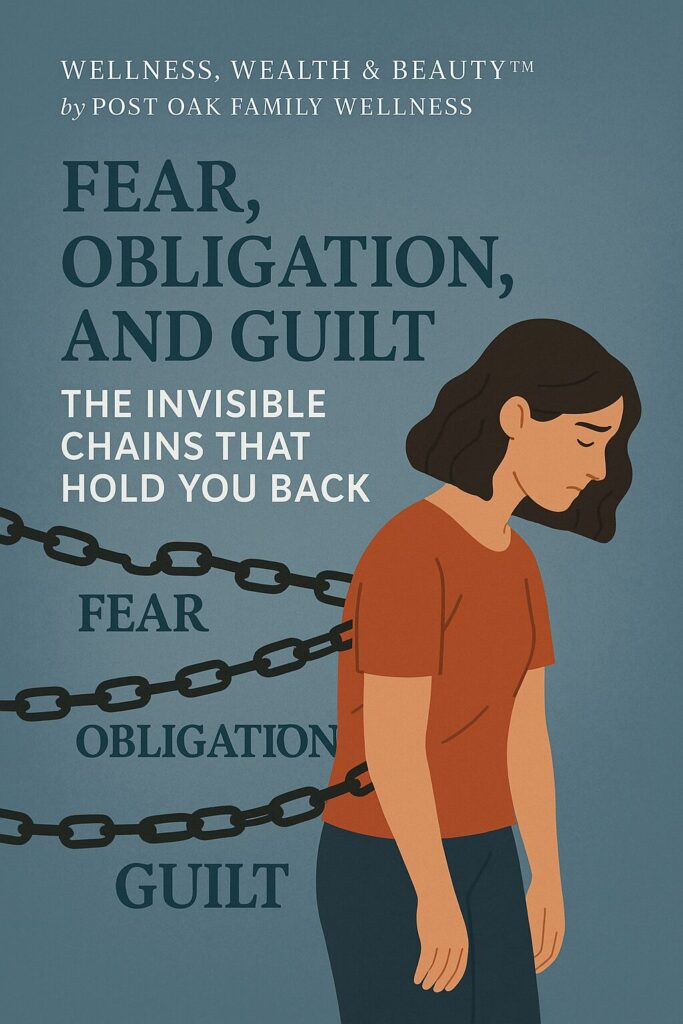
The Trap You Didn’t See Coming
Ever agreed to something you didn’t want to do just to avoid feeling bad? Maybe you stayed late at work because your boss gave you “that look.” Or you helped a friend move because they would have done it for you (would they, though?). That’s fear, obligation, and guilt (FOG) in action, the three little words that can turn your life into a never-ending favor list.
But what if I told you these aren’t just personal struggles? They’re strategic weapons used by manipulative bosses, toxic family members, and even entire systems to keep you obedient, overworked, and second-guessing yourself.
Sound dramatic? Maybe. But let’s crack this open and see how deep the rabbit hole goes.
Fear: The Puppet Strings That Keep You Still
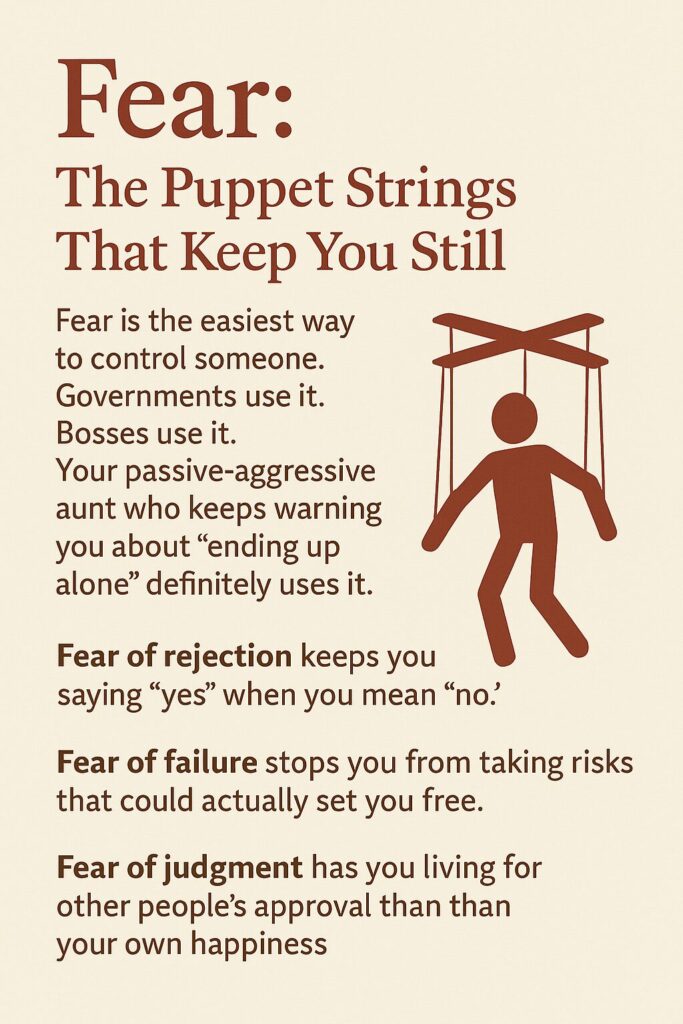
Fear is the easiest way to control someone. Governments use it. Bosses use it. Your passive-aggressive aunt who keeps warning you about “ending up alone” definitely uses it.
Fear of rejection keeps you saying “yes” when you mean “no.”
Fear of failure stops you from taking risks that could actually set you free.
Fear of judgment has you living for other people’s approval rather than your own happiness.
Real Talk: Stanford professor Robert Sapolsky, a leading neuroscientist, explains that fear isn’t just an emotion—it’s a deeply ingrained survival response.
“A sense of control is the number one predictor of psychological well-being. Take that away, and you create learned helplessness.” (Behave: The Biology of Humans at Our Best and Worst, 2017)
Translation? If someone can convince you that you have no control, they can make you do just about anything.
Ever noticed how companies push “limited-time offers” with “act now or regret it forever” energy? Yeah, that’s fear-based manipulation 101.
Obligation: The Chains Disguised as Morality
Obligation sounds noble. It’s what good people feel, right? But there’s a difference between genuine responsibility and manufactured duty.
Your boss makes you feel obligated to work overtime because you’re a team player, right?
Your family expects you to tolerate toxic behavior because, well, they’re family!
Your old college friend guilt-trips you into lending them money because remember that time they bought you a burger?
But real obligation comes with mutual respect. If it’s one-sided? That’s manipulation.
Case Study: In her book Set Boundaries, Find Peace (2021), therapist Nedra Glover Tawwab explains:
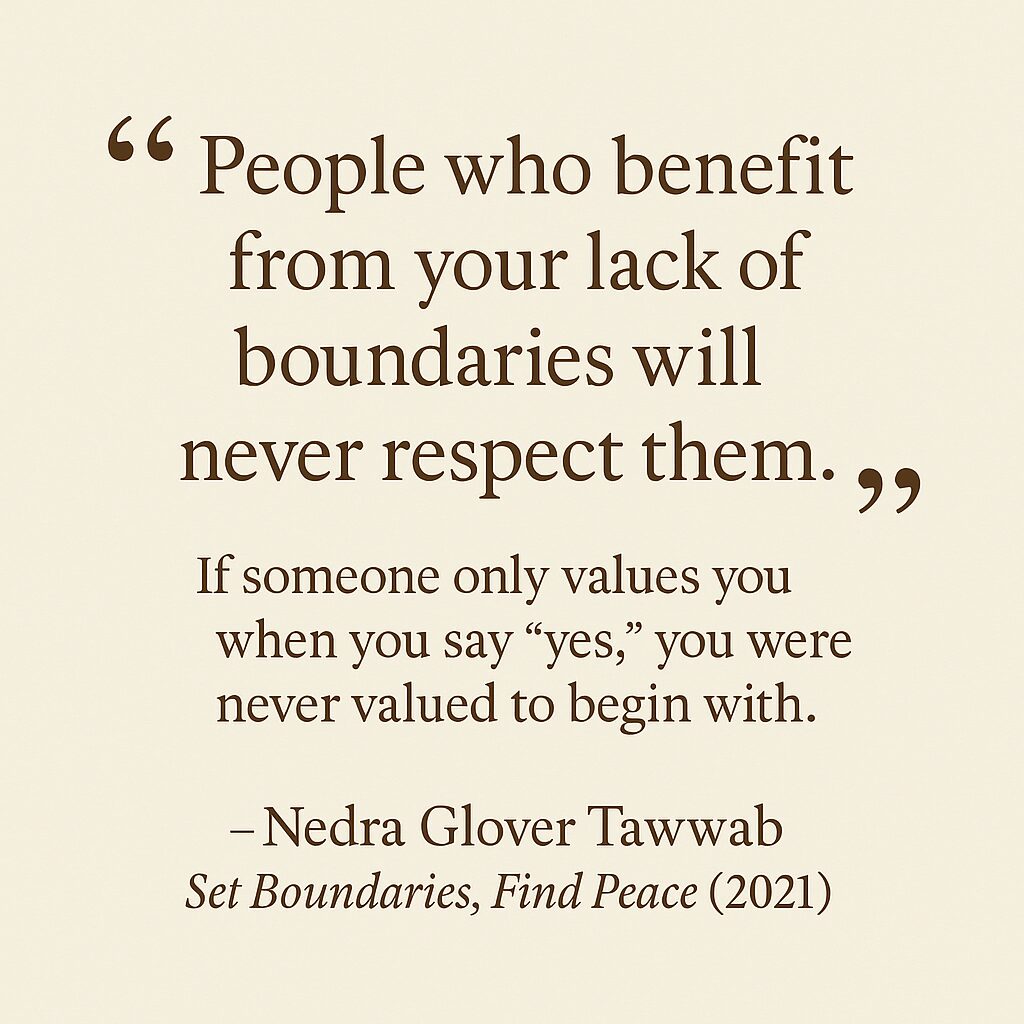
“People who benefit from your lack of boundaries will never respect them.” If someone only values you when you say “yes,” you were never valued to begin with.
What if saying “no” doesn’t make you a bad person?
Guilt: The Emotional Handcuffs You Don’t Even Notice
Guilt is the sneakiest of the three because it doesn’t just control your actions, it rewires how you see yourself.
Parents use it: “After everything we’ve done for you?”
Partners use it: “If you really loved me, you’d do this.”
Society uses it: “If you don’t support [insert cause], you’re part of the problem.”
Of course, accountability is important. But guilt thrives on exaggeration. It makes you feel responsible for things that aren’t actually your fault.
Expert Insight: Psychologist Dr. Guy Winch, author of Emotional First Aid (2013), explains:
“Guilt is only useful when it leads to corrective action. When it lingers without a clear solution, it becomes toxic.”
Translation? If guilt doesn’t offer a path forward, it’s just a leash someone else is holding.
If guilt was really about doing the right thing, it wouldn’t come with shame attached.
Breaking Free from FOG
Here’s the truth: If someone needs fear, obligation, or guilt to keep you around, they never deserved your presence to begin with.
So, what’s the solution?
1. Spot the pattern – Ask yourself: Am I doing this out of genuine care, or just to avoid negative consequences?
2. Reclaim your “no” – If saying “no” destroys a relationship, that relationship was conditional anyway.
3. Detach from guilt’s grip – If you wouldn’t force a friend to feel guilty for the same thing, don’t force yourself either.
The people who truly love and respect you won’t need to use fear, obligation, or guilt to keep you close. They’ll just want you there.
Now, ask yourself: Who in your life benefits from keeping you in FOG? And more importantly—how long are you going to let them?
🌿 Enjoyed this post?
Let’s keep the conversation going.
Join our newsletter for gentle reminders, wellness tools, parenting tips, and soulful reflections—delivered with care, not clutter. 💌
✨ You’ll also get early access to guides, seasonal self-care ideas, and special updates from Samantha, LPC & founder of Post Oak Family Wellness.
Sign up here and stay connected.