
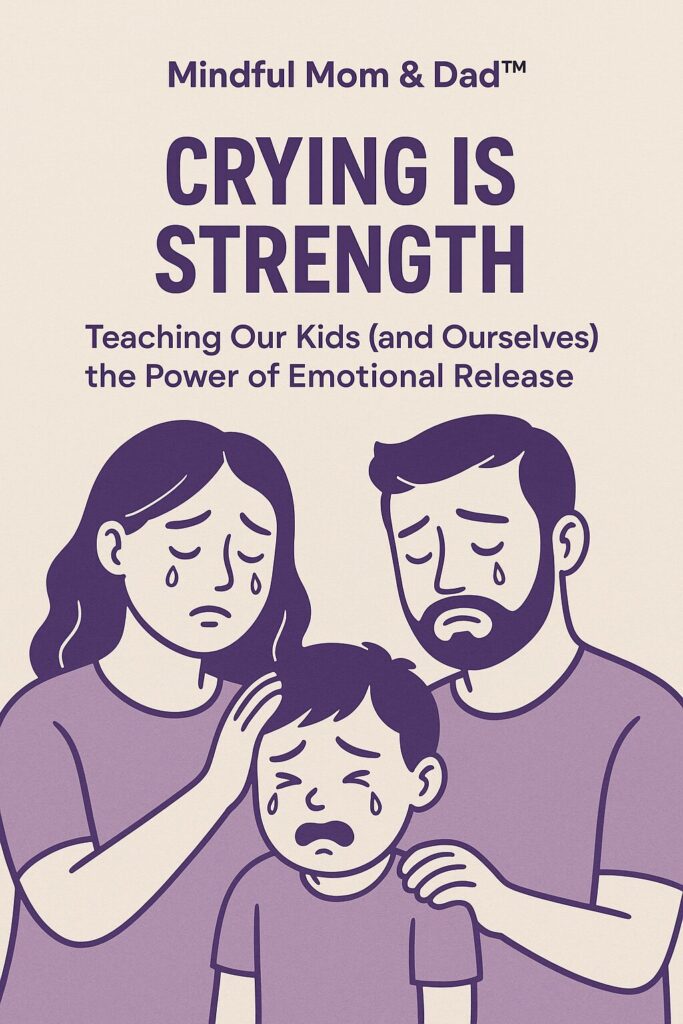
Breaking the Stigma Around Tears
As parents, we often hear phrases like “Stop crying,” “Be strong,” or “Don’t be so sensitive.” Many of us were raised to believe that crying is a sign of weakness, something to be hidden or suppressed. But what if we’ve been looking at it all wrong?
In reality, crying is a powerful tool for emotional regulation, stress relief, and personal growth. Instead of seeing it as a failure, we can teach our children (and remind ourselves) that tears are a natural and healthy way to process emotions.
Why Crying is a Strength, Not a Weakness
Crying Regulates Emotions and Reduces Stress
Crying isn’t just an emotional response; it’s a biological stress release mechanism. Tears help the body get rid of cortisol (the stress hormone), which builds up when we feel overwhelmed, frustrated, or anxious. This is why people often feel lighter and clearer after a good cry.
For kids, this is crucial. Their developing brains are still learning how to cope with big emotions, and crying is a healthy way for them to express what they’re feeling rather than bottling it up.
Crying Teaches Emotional Intelligence
Parents who encourage healthy emotional expression help their children develop emotional intelligence (EQ)—the ability to recognize, understand, and manage emotions effectively.
When we allow our kids to cry and validate their feelings instead of dismissing them, they learn:
✅ How to process emotions in a healthy way
✅ That emotions are temporary and manageable
✅ That it’s safe to express vulnerability
Children who grow up with emotional intelligence tend to have better relationships, stronger coping skills, and greater self-confidence.
Crying Strengthens Social Bonds
Tears have a unique way of deepening human connection. Studies show that when people cry, it often triggers empathy and support from others.
As parents, when we comfort our crying children instead of shutting them down, we build trust and emotional security. They learn that their emotions are valid and that they can come to us when they need support.
This lesson extends beyond childhood—adults who feel safe expressing emotions often build stronger friendships, deeper romantic relationships, and healthier family dynamics.
Crying Helps with Change and Growth
Life is full of big transitions—new schools, friendships, setbacks, and even paradigm shifts in how we see the world. Whether we’re children or adults, accepting change is hard.
Crying helps us:
✔ Release emotional tension
✔ Process and accept new realities
✔ Move forward with greater clarity
Instead of resisting emotions, we can teach our children that shedding tears is part of growth and resilience.
Crying is Courageous
It takes bravery to be emotionally honest. In a world that often tells us to “toughen up,” showing vulnerability is an act of strength, not weakness.
We should celebrate our children when they:
Express their feelings openly
Cry when they need to instead of suppressing emotions
Communicate their needs rather than shutting down
By doing this, we rewrite the narrative that emotions should be hidden. Instead, we teach them that emotions are meant to be felt, understood, and used for growth.
How Parents Can Support Healthy Emotional Expression
💡 Validate Their Feelings
Instead of saying, “Stop crying,” try:
🔹 “I see that you’re really upset right now. Do you want to talk about it?”
🔹 “It’s okay to feel sad. I’m here for you.”
💡 Model Emotional Expression
Children learn from what they see. When we show that it’s okay to cry—whether from frustration, sadness, or even joy—we teach them that strong people feel their emotions fully.
💡 Create a Safe Space
Make home a place where emotions are met with understanding, not punishment. Encourage open discussions about feelings and offer support rather than shame.
💡 Teach Coping Strategies
While crying is healthy, so is learning how to self-soothe. Teach kids ways to process emotions like:
✔ Taking deep breaths
✔ Writing or drawing their feelings
✔ Talking to a trusted person
✔ Hugging a stuffed animal (or a loved one!)
The Strength in Tears
Crying isn’t a sign of weakness, it’s a biological, emotional, and psychological necessity. When we change the way we view tears, we give our children the freedom to be emotionally strong, self-aware, and resilient.
So the next time your child cries (or you feel like crying yourself), remember: those tears aren’t a failure. They are a release, a lesson, and a step toward healing and growth.
🌿 Enjoyed this post?
Let’s keep the conversation going.
Join our newsletter for gentle reminders, wellness tools, parenting tips, and soulful reflections—delivered with care, not clutter. 💌
✨ You’ll also get early access to guides, seasonal self-care ideas, and special updates from Samantha, LPC & founder of Post Oak Family Wellness.
Sign up here and stay connected.