
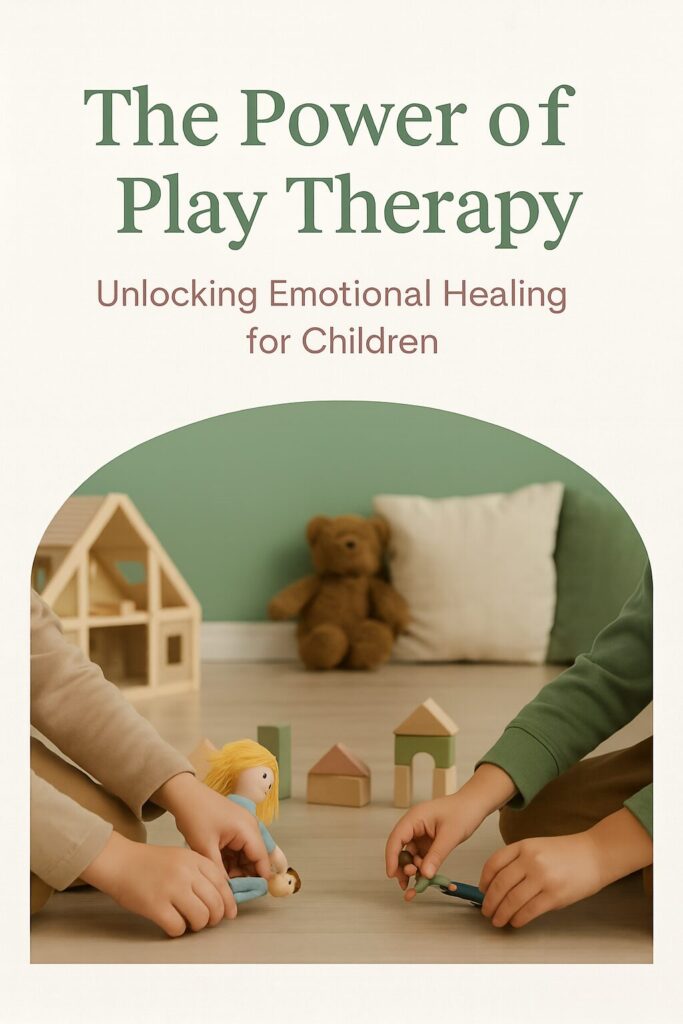
You’ve probably seen it before: your child playing with their toys, lost in their own world, or perhaps putting on a little show with their action figures. But have you ever wondered if that playtime could be more than just fun and games? As it turns out, play can be a crucial part of your child’s emotional development.
Play therapy, a proven therapeutic approach, uses this very play to help children express their feelings, work through their emotions, and build coping strategies. And yet, many parents are still unsure about how it works. Could this childhood pastime be the key to unlocking emotional healing?

Why Play Therapy?
Imagine you’re a child facing a world full of big emotions, complex situations, and not quite enough words to express it all. That’s where play therapy steps in – a safe, creative space where children can process their inner world through play. It’s like using a secret code to unlock their feelings. But is it really effective?
Here’s the thing: According to the American Psychological Association, play therapy has been shown to reduce anxiety, improve emotional regulation, and enhance social skills in children. And as I’ve seen in my own practice as a Licensed Professional Counselor (LPC-A), the results speak for themselves.
Let’s Talk Benefits: What Does Play Therapy Do?
Emotional Expression Made Easy
One of the most powerful benefits of play therapy is that it allows children to express emotions they may not fully understand yet. Instead of struggling to say, “I’m sad” or “I’m angry,” kids use dolls, puppets, or even simple art materials to show what’s going on inside.
“Children speak through play the way adults speak through words,” says Dr. Charles Schaefer, a pioneer in play therapy. And as a therapist, I’ve witnessed children start to verbalize their feelings once they’ve had the chance to express them nonverbally in their sessions.
Building Coping Skills Without the Stress
For many kids, therapy can feel intimidating. But in a play therapy session, they don’t even realize they’re learning important coping skills because they’re engaged in the process. Through games, storytelling, or role-playing, children can practice dealing with stressful situations in a low-pressure environment.
Humor aside, think of it like giving your child a toolbox for emotional resilience—one that’s hidden inside a game of pretend.
Improved Communication and Social Skills
Play therapy isn’t just for kids who struggle with anxiety or trauma. It’s also fantastic for children who need help with social skills. By working with a therapist, children learn how to take turns, express their needs, and engage with others in healthy, positive ways.
I’ve had parents tell me how amazed they are at their child’s improvement in making friends after a few months of therapy. It’s as if their child finally discovered the language of friendship.
Play Therapy in Action: Real-life Success
Now, you might be thinking, “Does this really work in the real world?” Let’s just say that I’ve seen kids go from being unable to express themselves in therapy to confidently managing their emotions in social settings. One case that stands out to me is a young boy who used to act out in school, unable to articulate his frustration. After several sessions of play therapy, he started using words like “I feel mad” instead of resorting to physical actions. The change was remarkable.
Moreover, research shows that play therapy can be effective in helping children with a range of issues including grief, trauma, ADHD, and even autism spectrum disorders (Landreth, 2012). It’s not just about the immediate relief—it’s about building a foundation of emotional strength that can last well into adulthood.
The Magic of Play
So, is play therapy the magic bullet to solving every child’s emotional issue? Maybe not. But it’s definitely a powerful tool that gives children the chance to understand and manage their feelings, something that’s vital in today’s fast-paced, often stressful world.
If you’re a parent looking for a way to help your child navigate their emotions with grace and resilience, play therapy might just be the answer you’ve been searching for. The great thing is that it’s both fun and effective—a win-win in the world of therapy!
Take Action:
- Wondering how play therapy techniques can benefit your child? Schedule a free 30-minute consultation with me today, and let’s explore how we can support your child’s emotional growth together.
- Get Started Now: Ready to see the transformation in your child? Reach out to book your child’s first therapy session using techniques from play therapy and begin the journey towards emotional well-being.
- Let’s Talk: Have questions about how therapy works or whether it’s right for your child? Let’s chat! Contact me for a no-pressure discussion about how we can help your little one thrive.
Samantha Lubin (Binstock), Licensed Professional Counselor Associate
Helping children express their emotions through play, one toy at a time.
🌿 Enjoyed this post?
Let’s keep the conversation going.
Join our newsletter for gentle reminders, wellness tools, parenting tips, and soulful reflections—delivered with care, not clutter. 💌
✨ You’ll also get early access to guides, seasonal self-care ideas, and special updates from Samantha, LPC-Associate & founder of Post Oak Family Wellness.
Sign up here and stay connected.