

It’s not just idle chatter, it’s a mirror.
Let’s be honest:
We’ve all done it.
Gossip. Whispered behind someone’s back. Passed along a juicy tidbit that wasn’t ours to tell. (Even while pretending we “don’t like drama.”)
But here’s where things get interesting:
That “harmless” venting session at lunch? That compulsive breakdown of someone else’s choices? According to science, it may have more to do with us than with them.
Let’s peek behind the curtain.
1. Gossip as a Coping Mechanism for Low Self-Esteem
Ever caught yourself feeling a little better after judging someone else’s outfit, parenting style, or failed relationship? That micro-boost wasn’t your confidence—it was your ego, throwing on a fake mustache and sunglasses.
📚 A study from the University of Groningen found that people with low self-esteem are more likely to engage in negative gossip. It’s a psychological safety net. By dragging others down, we build a wobbly tower beneath ourselves.
And get this—research in the Journal of Personality and Social Psychology confirms: hearing about someone else’s mistakes gives the gossiper a temporary ego boost. (Keyword: temporary.)
“When self-image is threatened, gossiping becomes a psychological bandage.” — Dr. Elena Martinescu, lead author on social coping studies
2. Deflection: The Oldest Trick in the Book
Insecurity has a funny way of sneaking out sideways.
🔍 A 2014 study in Social Psychological and Personality Science revealed that people who feel threatened or judged are more likely to gossip—especially about the very things they’re insecure about themselves.
This is projection at its finest.
Think: “I’d never do that,” said by someone doing exactly that—just not out loud.
3. The Dangerous Game of Social Comparison
Remember Festinger? Probably not unless you’re deep into psych theory, but his 1954 Social Comparison Theory is still haunting group chats to this day.
Here’s the gist: we determine our self-worth by comparing ourselves to others.
And when we’re feeling not-so-great, we reach for comparisons that make us feel superior.
What’s the easiest shortcut to that?
You guessed it—gossip. Specifically, negative gossip.
It’s the emotional equivalent of “I may be struggling, but at least I’m not her.”
Ouch.
4. Gossip as a Power Play
Sometimes, gossip isn’t about insecurity. It’s about control.
According to research published in Human Nature, gossip is often used as a social weapon to subtly (or not-so-subtly) shift power dynamics.
By being “in the know,” people assert status.
By hinting that someone else is slipping? They position themselves as more competent, more moral, more worthy.
It’s like office politics without the memo.
“Self-serving bias leads people to credit themselves for success and blame others for failure.” — Dr. Roy Baumeister, social psychologist and author
5. The Brain Loves the Juice
Let’s talk neuroscience.
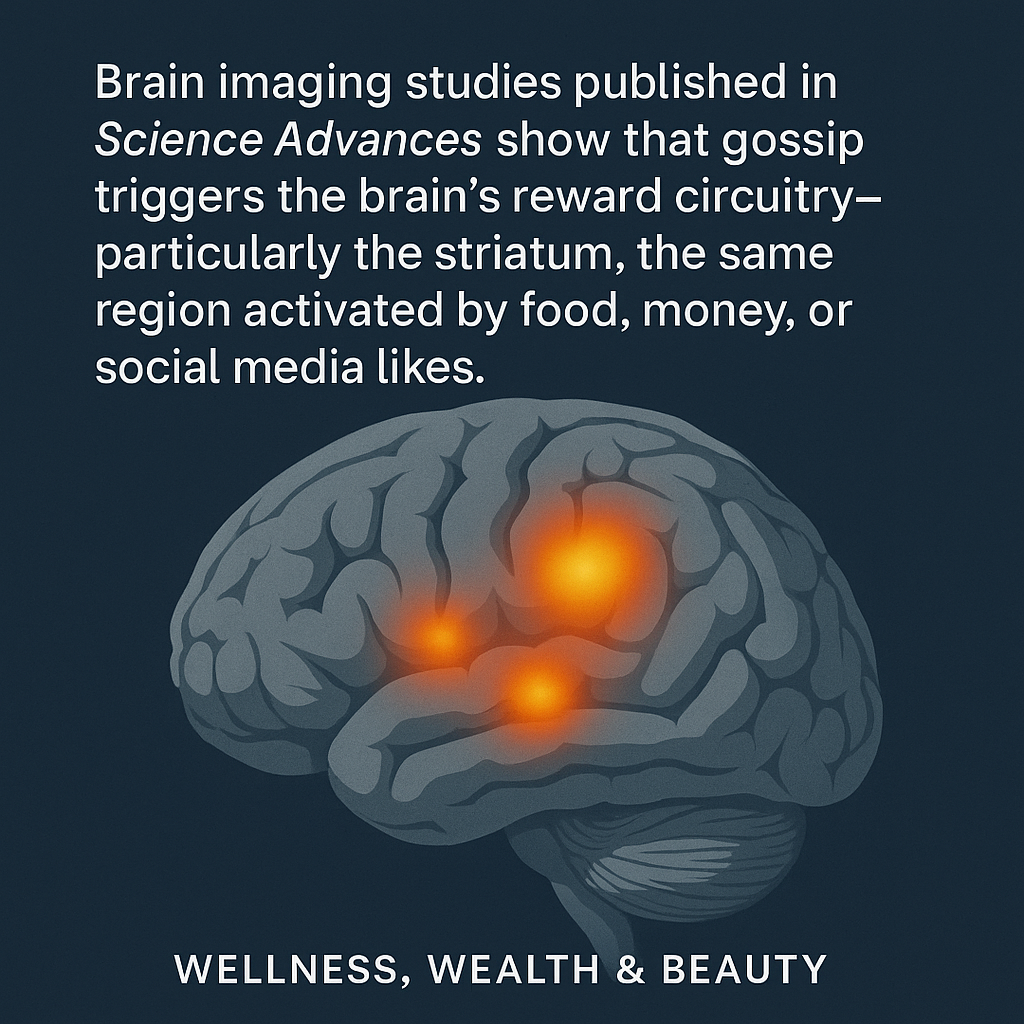
🧠 Brain imaging studies published in Science Advances show that gossip triggers the brain’s reward circuitry, particularly the striatum, the same region activated by food, money, or social media likes.
Translation? Gossip gives you a dopamine hit.
The catch? Like sugar, it fades fast, and then you’re chasing the next “high.” Chronic gossipers may not be mean-spirited—they might just be hooked on feeling important or included.
—
6. When Gossip Goes Professional
Workplace gossip might seem like part of the culture (hello, water cooler talk), but it often masks deeper anxieties.
A study in the Journal of Applied Psychology found that employees who feel insecure about their performance or position are significantly more likely to gossip.
It’s a self-preservation tactic:
“If I point out her mistakes, maybe they won’t notice mine.”
But it erodes trust and backfires—fast.
So… What Now?
Let’s get real.
Gossip isn’t always malicious. Sometimes it’s bonding. Sometimes it’s curiosity. Sometimes it’s sheer boredom.
But when it becomes a habit, or a way to avoid dealing with our own stuff? That’s when it hurts.
If you’ve been on the receiving end of gossip, you’re not imagining it.
And if you’ve caught yourself spreading it, you’re not a villain. You’re human.
Self-awareness is the antidote.
Ask yourself:
What am I really feeling right now?
Is this about them or about me?
What would I say if they were in the room?
Sometimes, it’s not what we say about others that defines us.
It’s what we say when they’re not around.
You don’t need to put others down to lift yourself up.
You don’t need the last word to have the strongest voice.
You don’t need to gossip to be interesting.
If you’re looking for a healthier, more authentic way to process what’s going on in your life Samantha’s here to help.
🧠 Mental health, emotional safety, and personal growth start with honest conversations with yourself and others.
Let’s make space for that.
🌿 Enjoyed this post?
Let’s keep the conversation going.
Join our newsletter for gentle reminders, wellness tools, parenting tips, and soulful reflections—delivered with care, not clutter. 💌
✨ You’ll also get early access to guides, seasonal self-care ideas, and special updates from Samantha, LPC & founder of Post Oak Family Wellness.
Sign up here and stay connected.