
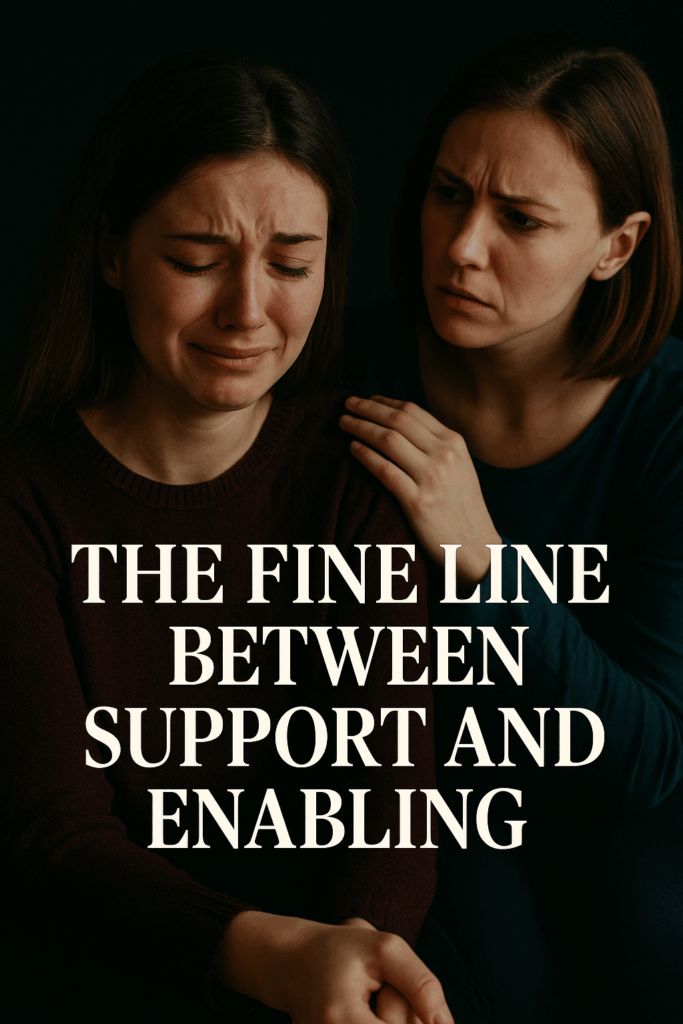
We’ve all been there, offering a helping hand to a friend or loved one, only to wonder later if we truly helped or inadvertently made things worse.
Imagine this: Your friend, Alex, calls you in a panic. They’ve missed a work deadline again because they were overwhelmed. You drop everything to help them finish their project, just like the last three times.
At first glance, you’re the supportive friend. But as this pattern repeats, a nagging question arises: Am I truly helping Alex, or am I enabling a cycle that’s holding them back?
Understanding the Difference
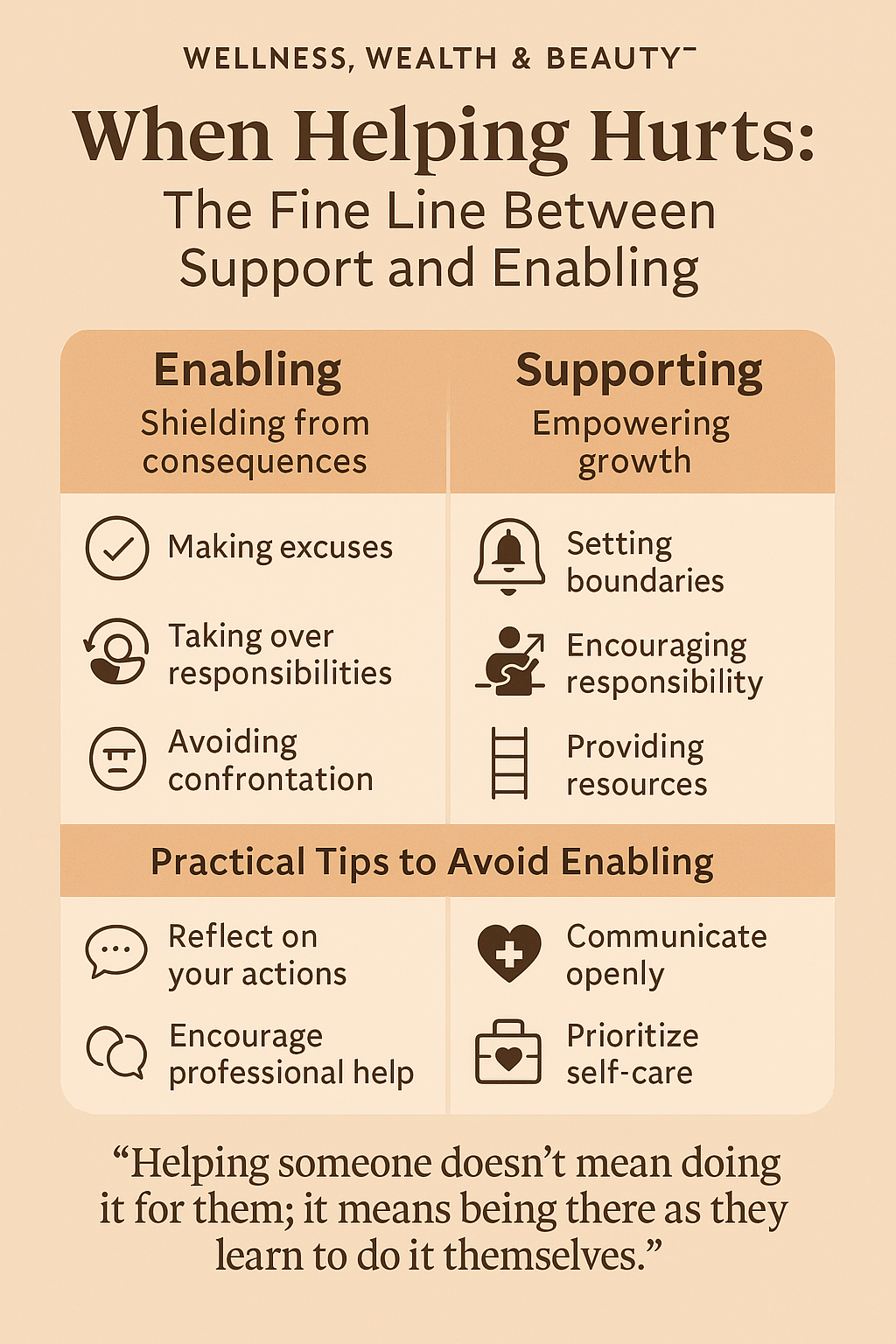
Enabling: Shielding from Consequences
Enabling involves actions that protect individuals from the consequences of their behaviors, often allowing problematic patterns to continue. Signs of enabling include:
Making excuses: “Alex is just going through a tough time.”
Taking over responsibilities: Consistently completing tasks they neglect.
Avoiding confrontation: Not addressing recurring issues to keep the peace.
As Healthline notes, enabling can involve ignoring or tolerating problematic behavior, providing financial assistance, or covering for someone, which ultimately doesn’t help them change .
Supporting: Empowering Growth
Support, on the other hand, involves helping someone in a way that encourages their autonomy and growth.
Characteristics of supportive behavior:
Setting boundaries: Helping within limits that don’t compromise your well-being.
Encouraging responsibility: Motivating them to take ownership of their actions.
Providing resources: Offering tools or information to help them help themselves. According to MindBodyGreen, supporting someone means acknowledging they are the master of their own destiny and having faith in their capacity to make their own choices and learn from mistakes .
Practical Tips to Avoid Enabling
1. Reflect on your actions: Ask yourself if your help is fostering dependence or promoting independence.
2. Communicate openly: Discuss your concerns with your loved one without judgment.
3. Encourage professional help: Suggest seeking support from therapists or support groups.
4. Prioritize self-care: Ensure you’re not neglecting your own needs in the process. Psych Central emphasizes the importance of setting boundaries and not taking on more responsibilities for others, as this can lead to resentment and burnout.
Navigating the line between support and enabling is challenging but crucial. By fostering open communication, setting healthy boundaries, and encouraging personal responsibility, you can truly support your loved ones in a way that promotes growth and well-being.
Remember, it’s not about withdrawing support but offering it in a way that empowers rather than hinders.
“Helping someone doesn’t mean doing it for them; it means being there as they learn to do it themselves.”
🌿 Enjoyed this post?
Let’s keep the conversation going.
Join our newsletter for gentle reminders, wellness tools, parenting tips, and soulful reflections—delivered with care, not clutter. 💌
✨ You’ll also get early access to guides, seasonal self-care ideas, and special updates from Samantha, LPC-Associate & founder of Post Oak Family Wellness.
Sign up here and stay connected.