
You’ve barely processed what just happened, yourself. Maybe a hurricane tore through your neighborhood, or wildfires chased your family from home with nothing but a backpack. And while you’re juggling insurance calls, shelter plans, and emotional exhaustion… your child looks up and asks:
“Is our house gone forever?”
Your heart drops. You want to say something helpful, but how do you explain chaos to a child?
Know this: Children don’t need you to have all the answers. They need you to be present, regulated, and real. In the wake of a disaster, parenting becomes less about fixing everything, and more about showing up as a calm, grounded guide (even when you’re quietly falling apart inside).
Let’s walk through how to support children through trauma, using warmth, truth, and science-backed care:
“Their Nervous System is Watching Yours”
Children read our faces like weather reports. If you’re a bundle of panic, they’ll feel it, even if your words say “everything’s fine.”
“The key to calming a child is first calming yourself.” – Dr. Becky Kennedy, clinical psychologist
Use co-regulation:
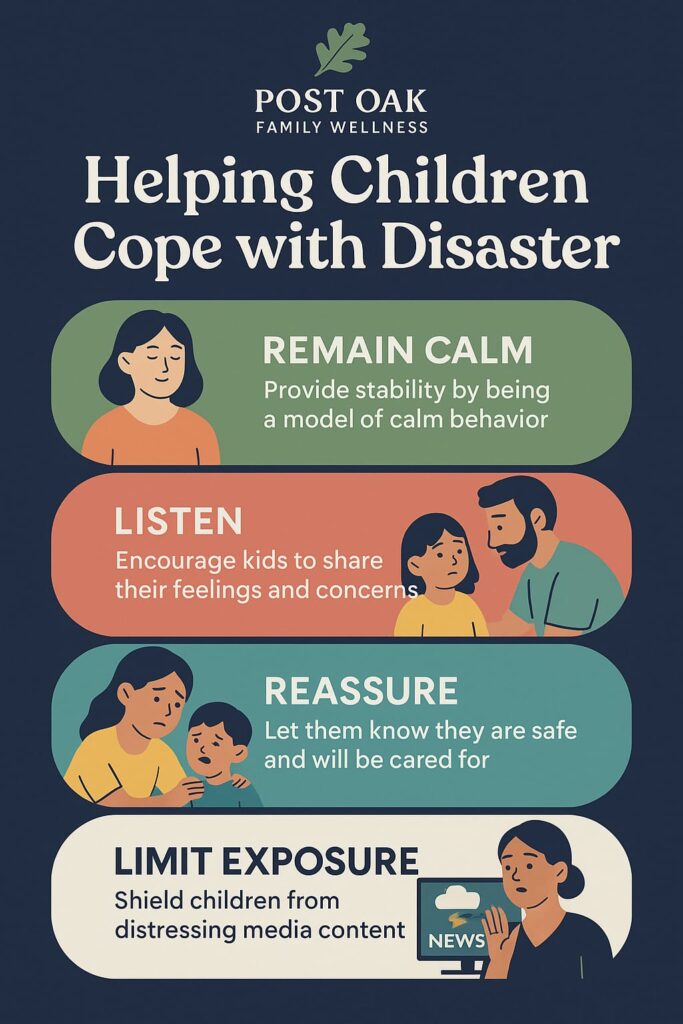
Take a breath with your child. Narrate your emotions gently:
“I feel sad and a little scared, but I know we’re safe together.”
Slow your body language.
Lower your voice.
Invite closeness.
This isn’t about pretending everything’s okay. Instead, it’s about modeling how to walk through fear without letting it take the wheel.
Give Their Feelings a Name (Even the Messy Ones)
Trauma-informed parenting teaches us that behavior is communication. If your child is clingy, angry, or acting “younger,” they’re not being difficult, they’re doing their best with a nervous system in survival mode.
Try this:
“You’re feeling really mad, huh? That makes sense. Everything’s different right now.”
“It’s okay to cry. I’m right here.”
The goal isn’t to “fix” the emotion. It’s to validate it.
Let them know their feelings aren’t too much for you to handle.
“Name it to tame it.” – Dr. Daniel Siegel, author of The Whole-Brain Child
Protect Predictability Wherever You Can
When the outside world is unstable, kids cling to what is stable.
Create soft structure:
Simple routines (even in a hotel room or shelter)
Familiar bedtime songs or stories
A “comfort kit” with a favorite toy, snack, or photo
Don’t worry about being perfect. Consistency, even in tiny ways, builds a sense of safety.
And if you break the routine? Just name it gently:
“Usually we read two stories, but tonight we’re tired. Tomorrow, we’ll do it again.”
Share Information… Gently
Children are meaning-makers. If you don’t tell them what’s happening, they’ll fill in the blanks with scarier versions.
Use simple, clear language based on age:
For young kids:
“There was a big storm. It broke some things. We’re staying here while helpers fix it.”
For older kids: Invite questions. Offer honest answers without overwhelming detail.
Avoid false promises like
“Everything will go back to normal soon.”
Instead say:
“Things are hard right now, but we’ll get through it together. Grownups are working hard to help.”
Watch for Delayed Reactions
Not all trauma responses show up right away. Some kids act fine at first, only to struggle weeks or months later.
Look for:
Trouble sleeping or eating
Nightmares or clinginess
Sudden outbursts or regressions
Physical complaints (stomachaches, headaches)
If you’re worried, reach out. Schools, pediatricians, and trauma-informed therapists (like Samantha here at Post Oak Family Wellness 😉) can help.
“It’s never too late to heal. Trauma is not a life sentence.” — Dr. Bruce Perry, child psychiatrist
You don’t need to be a superhero parent. You just need to be a steady hand in the storm.
When your child cries or screams or curls into a ball, don’t panic. That’s not you failing, it’s them trusting you with their pain. You’re their safe harbor. Even if your roof is gone
Here’s something to carry with you:
“The child who is not embraced by the village will burn it down to feel its warmth.” — African proverb
Let’s rebuild the village, starting with how we listen, how we show up, and how we love forward.
🧡 Post Oak Family Wellness | Because mental health matters, even in disaster relief.
🌿 Enjoyed this post?
Let’s keep the conversation going.
Join our newsletter for gentle reminders, wellness tools, parenting tips, and soulful reflections—delivered with care, not clutter. 💌
✨ You’ll also get early access to guides, seasonal self-care ideas, and special updates from Samantha, LPC & founder of Post Oak Family Wellness.
Sign up here and stay connected.